
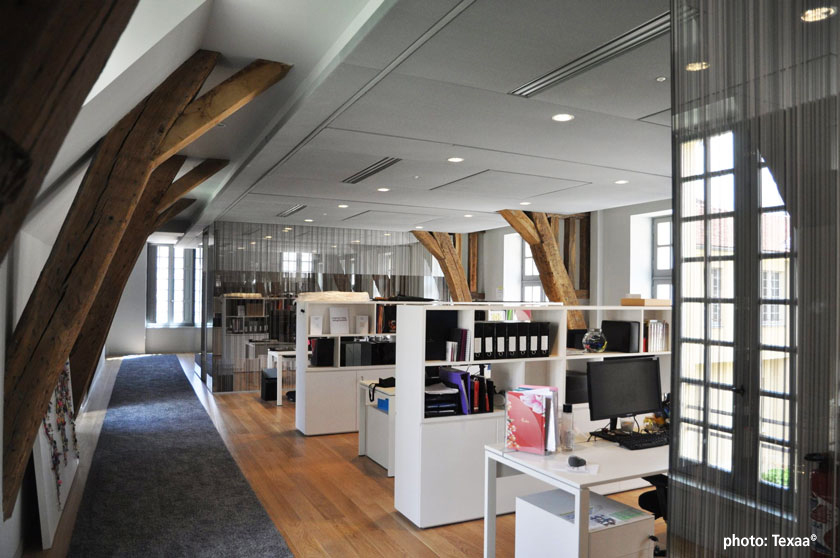
These 6 tips will help you on your way to improving the acoustics yourself.
Sound is everywhere! This can be desirable, think of music. But what to do about unwanted noise when it causes complaints such as headaches, dizziness, stress, fatigue, irritation, and loss of concentration? Fortunately, there are numerous excellent and professional solutions. You can also take the necessary measures yourself to improve room acoustics. That is why we present this blog with six tips.
Tip 1. Integrate soft materials into your interior
Hard materials such as glass, concrete, stone, plaster, steel, and wood cause an excessively long reverberation time. The use of soft materials reduces reverberation. Consider the use of upholstered furniture and the application of rugs.
Tip 2. Divide spaces
Divide larger spaces into smaller areas. Drastic renovation measures are really not always necessary. A space can be separated by using room dividers and panel curtains, or by placing bookcases perpendicular to the wall.
Tip 3. Avoid noisy equipment
It is advisable to move noisy printers and photocopiers to a separate room. This is better for the health of the employees. When purchasing new equipment, it makes sense to buy low-noise devices. A device in the immediate vicinity with a noise level of more than 35 dB can already be considered disruptive.
Tip 4. Different places for different functions
Separate spaces where noisy activities take place from spaces where peace and quiet are desired. Consider separate meeting rooms, quiet areas, concentration rooms, consultation rooms, and meeting rooms.
Tip 5. Be aware and alert
Try to keep the noise level of rattling carts in the corridors, jingling bunches of keys, clicking shoe heels, staff consulting, telephone and counter conversations, and noisy patients and residents to a minimum.
Tip 6. Place plants in the room
Especially in large spaces with many hard materials, plants have a somewhat beneficial effect on acoustics. Large plants with large leaves yield the best results, with arrangements of three to five plants working better than individual plants. Furthermore, it is more effective to place plants next to walls and in corners than in the center of a room.
We hope these tips help you on your way. We would be happy to advise you on a professional approach to acoustics.