
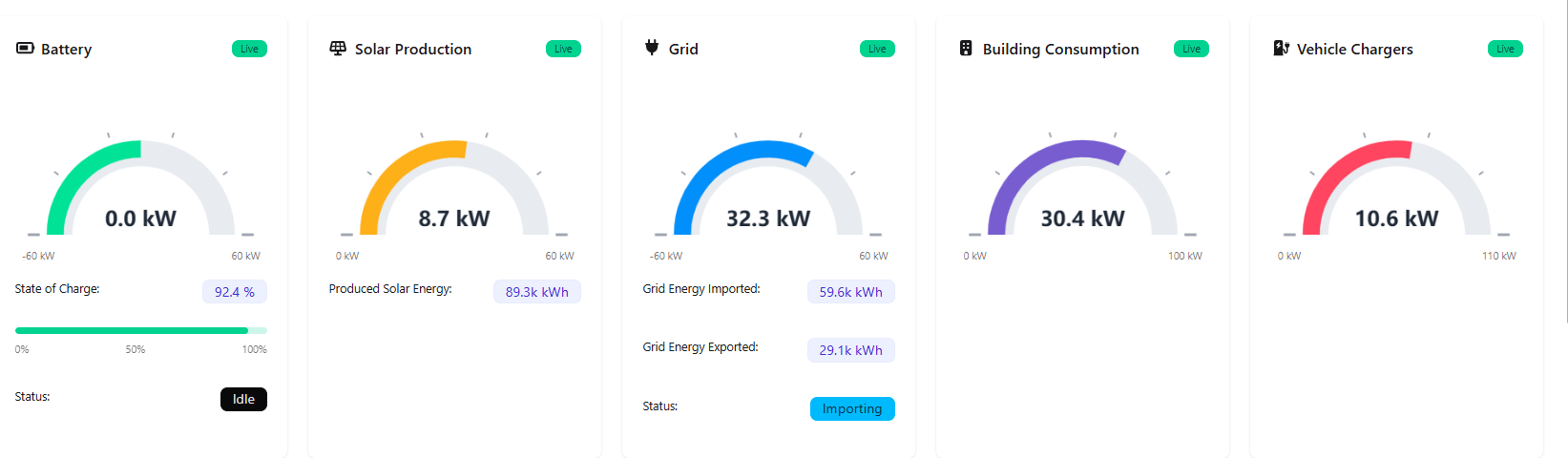
Buildings are becoming increasingly complex, and the pressure to operate more energy-efficiently is mounting. With the introduction of new legislation, a Building Automation and Control System (BCS) will become mandatory for non-residential buildings with large climate control systems starting in 2026. In 2030, the threshold will be lowered further, meaning that virtually all larger buildings will have to comply with these requirements. However, a BCS is more than just a mandatory system: it forms the basis for smart control, energy conservation, and better insight into building performance.
A GACS connects installations such as climate control, lighting, security, and energy management into one integrated whole. The system monitors continuously, analyzes data, and makes automatic adjustments. This provides control over consumption and costs, and deviations are detected early. This enables predictive maintenance and prevents unnecessary breakdowns. For property owners, this means fewer risks and a higher asset value.
The implementation begins with mapping the existing installations. Many buildings still run on old settings, the exact reasons for which no one knows. By defining goals – ranging from energy performance to comfort – a GACS can calculate and execute the optimal strategy. Smart monitoring then ensures continuous insight and provides concrete management information. Involving users is essential in this process: a building functions best when it aligns with their needs.
With rapidly changing regulations and increasing energy challenges, GACS is not a luxury but a logical step towards future-proof real estate. It offers not only compliance but, above all, a strategic advantage: better-performing buildings, lower costs, and a foundation for further sustainability.